Description
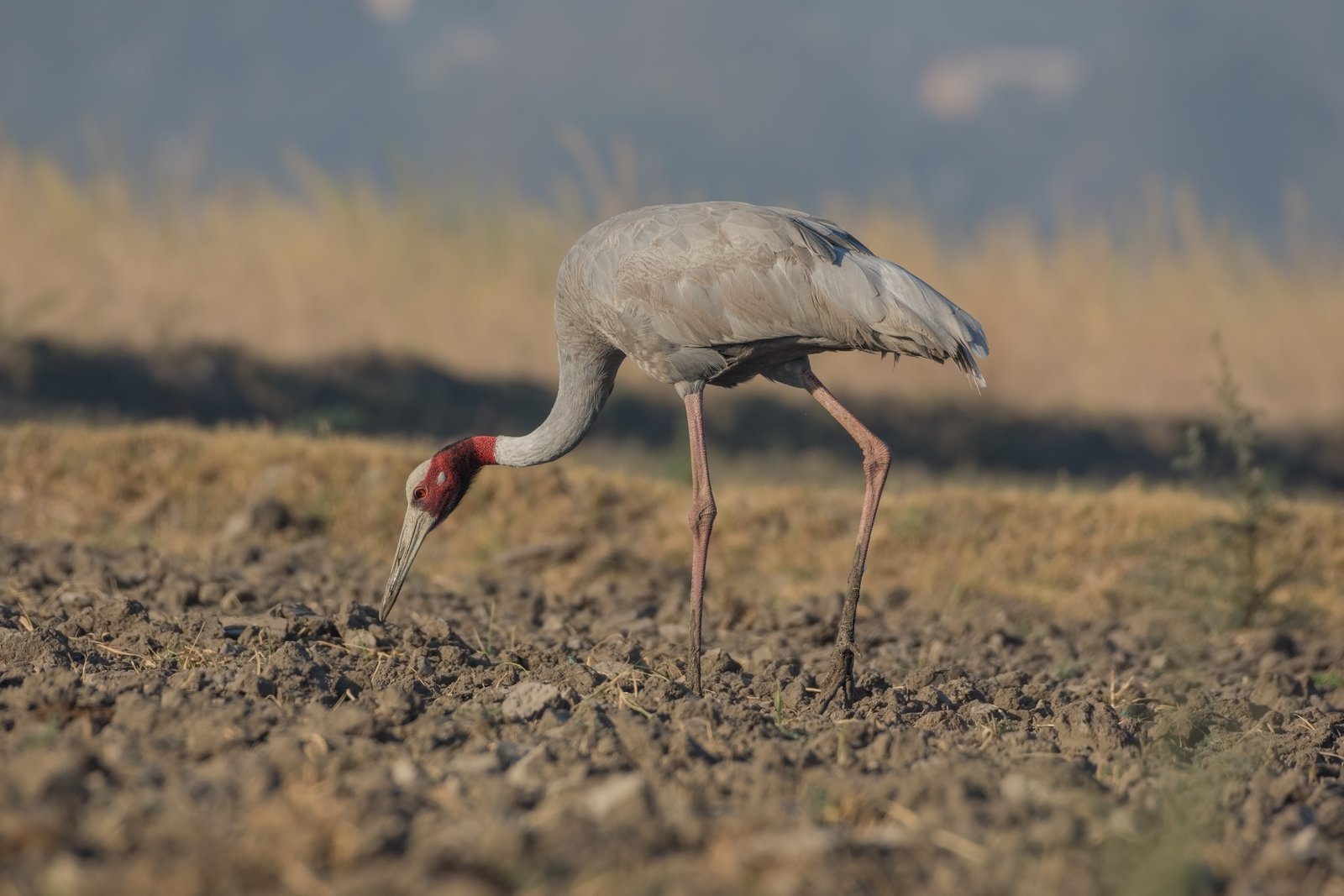
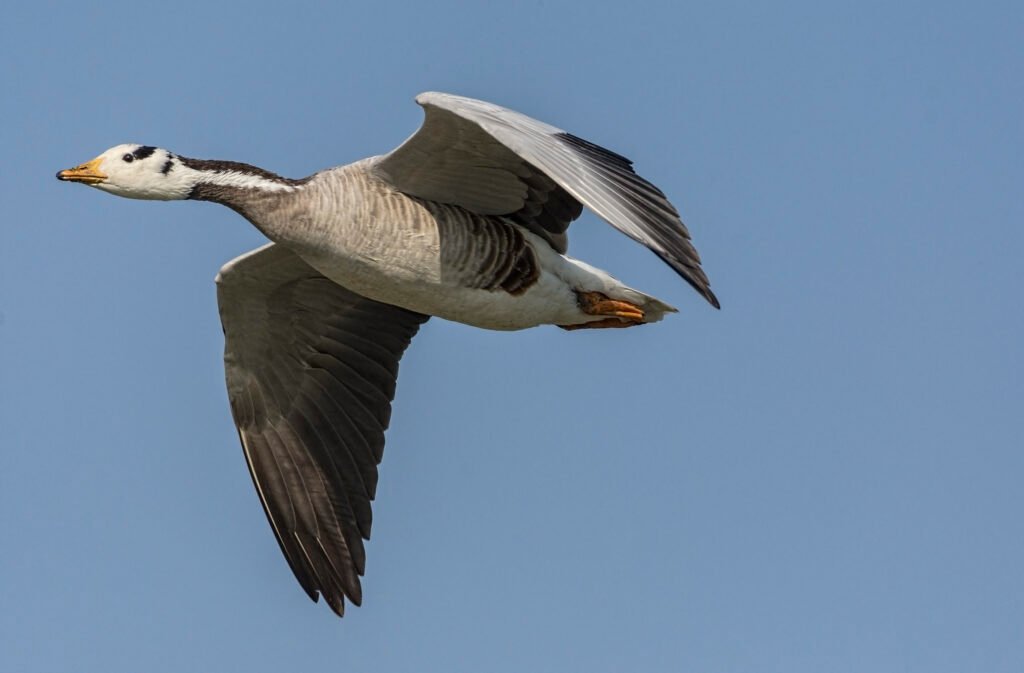
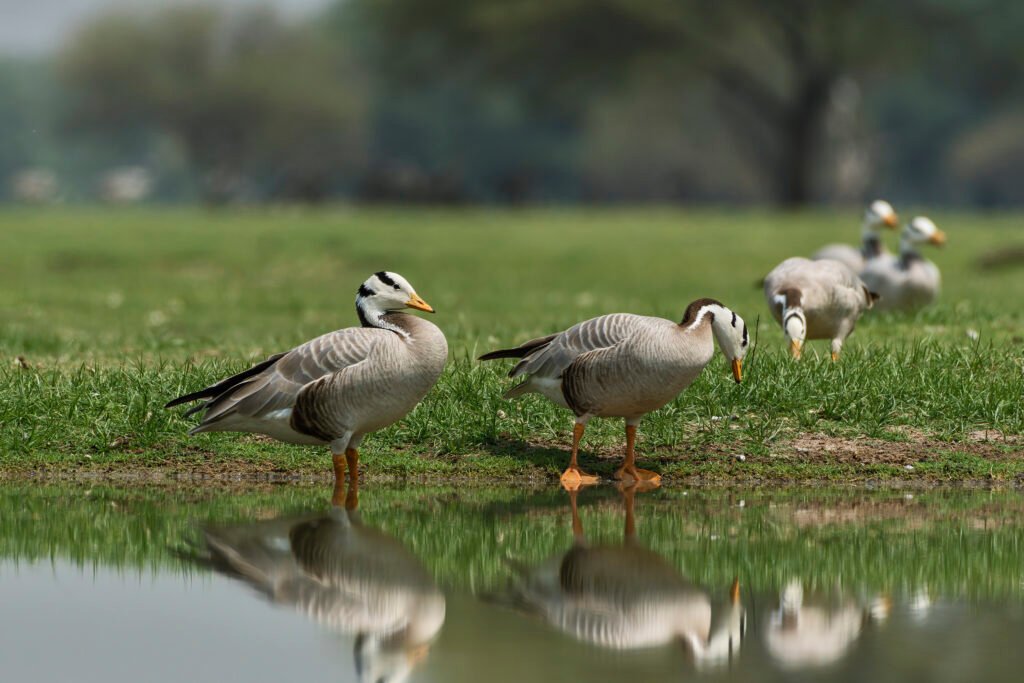
The Sarus Crane (Antigone antigone) is one of the most iconic birds of the Indian subcontinent. This original wildlife photograph captures the impressive presence of a Sarus Crane in its natural environment.
The photograph was captured in the wild by wildlife photographer Amarjeetsinh Jhala and is part of the Focused Nature By AJ collection of original Indian bird and wildlife photography.
About the Sarus Crane
The Sarus Crane (Antigone antigone) is a large crane belonging to the family Gruidae. It is instantly recognizable by its tall stature, long legs, long neck, grey body and distinctive red skin covering the head and upper neck.
The Sarus Crane is famous for being the world’s tallest flying bird, standing close to six feet tall. Its remarkable size makes it one of the most impressive birds that can be observed in India’s wetlands and agricultural landscapes.
Sarus Crane in India
The Sarus Crane is a resident species in India, meaning that Indian populations do not undertake the type of long-distance seasonal migration associated with many other waterbirds.
The species is strongly associated with wetland habitats and can also occur in agricultural landscapes, particularly areas containing suitable shallow wetlands, marshes and flooded fields.
The 2025 State of India’s Birds assessment identifies the Sarus Crane as a High Conservation Priority species in India. It is classified as Vulnerable globally and is protected under Schedule I of India’s Wildlife Protection Act.
The assessment reports a rapid long-term decline, with an estimated long-term trend of approximately 76.84% decline, and also reports a rapid current annual decline.
Gujarat, Madhya Pradesh and Uttar Pradesh are identified as key states for the species in India.
Identification Features
The Sarus Crane can be recognized by several distinctive characteristics:
- Very tall body
- Long, slender legs
- Long neck
- Grey body and wings
- Red bare skin on the head and upper neck
- Pale or whitish crown
- Long, pointed bill
- Large wings
- Graceful upright posture
Its combination of exceptional height and red-and-grey coloration makes the Sarus Crane one of the easiest large wetland birds to recognize in India.
Sarus Crane Habitat
Sarus Cranes are closely associated with wetlands, including marshes, shallow water bodies, flooded agricultural fields, grasslands and other wet habitats.
They can also be seen in agricultural landscapes where suitable feeding and nesting habitat remains available.
Healthy wetlands and surrounding agricultural ecosystems are therefore important for maintaining Sarus Crane populations.
Behaviour and Social Life
Sarus Cranes are well known for their strong pair bonds and distinctive courtship behaviour.
Pairs can perform elaborate displays involving calling, wing movements, jumping and synchronized postures. These dramatic displays are among the most memorable behaviours associated with cranes.
Sarus Cranes can also be highly vocal, particularly when communicating with their partners or responding to other cranes.
Sarus Crane Conservation
The Sarus Crane is an important symbol of wetland conservation in India.
According to the State of India’s Birds 2025 assessment, the species has experienced a substantial long-term decline in India and is categorized as a High Conservation Priority species. Its global status is Vulnerable.
Protecting wetlands, maintaining suitable agricultural landscapes and reducing disturbance around breeding and feeding areas are important components of Sarus Crane conservation.
Photographs of the species can also help create awareness about India’s wetland birds and the importance of protecting their habitats.
Sarus Crane Photography
Photographing a Sarus Crane provides an opportunity to document one of India’s most spectacular resident birds.
Its exceptional height, long legs, red head and neck and graceful posture make it a particularly striking subject for wildlife photography.
This original photograph forms part of the Focused Nature By AJ collection documenting Indian cranes, wetland birds, wildlife and nature through photography.
Photography Details
Common Name: Sarus Crane
Scientific Name: Antigone antigone
Family: Gruidae
Bird Type: Crane / Wetland Bird
Migratory Status: Resident
Habitat: Wetlands
Location: India
Photographer: Amarjeetsinh Jhala
Conservation Information
Global Conservation Status: Vulnerable
Indian Conservation Priority: High
Wildlife Protection Act: Schedule I
The conservation classification and Indian trend information are based on the State of India’s Birds 2025 assessment.
About This Photograph
This is an original wildlife photograph captured in the wild by wildlife photographer Amarjeetsinh Jhala.
The photograph is part of the Focused Nature By AJ collection documenting India’s birds and wildlife in their natural habitats.
The image can be used for bird identification resources, educational projects, wildlife articles, nature websites, editorial content, conservation awareness, birding publications and approved commercial applications according to the selected license.
Image Licensing
Personal Use
Suitable for personal collections, wallpapers and other non-commercial personal projects.
Commercial Use
Suitable for websites, digital marketing, advertising, social media, business presentations and other approved commercial applications.
Printing & Publication
Suitable for magazines, books, newspapers, calendars, educational publications, exhibitions and other approved printed and editorial uses.
Explore More Indian Bird Photography
Explore more original Sarus Crane photographs, Indian crane photography, wetland bird photography, Indian bird photography, wildlife photography India and nature photographs captured by Amarjeetsinh Jhala.
Focused Nature By AJ documents India’s birds and wildlife through original nature photography, with selected photographs available for personal, commercial and printing & publication licensing.
Reviews
There are no reviews yet.