Description
The Gray Langur (Semnopithecus entellus), commonly known as the Hanuman Langur or Northern Plains Gray Langur, is one of India’s familiar primates. It is widely associated with forests, scrublands, open landscapes, villages, towns and other human-dominated environments.
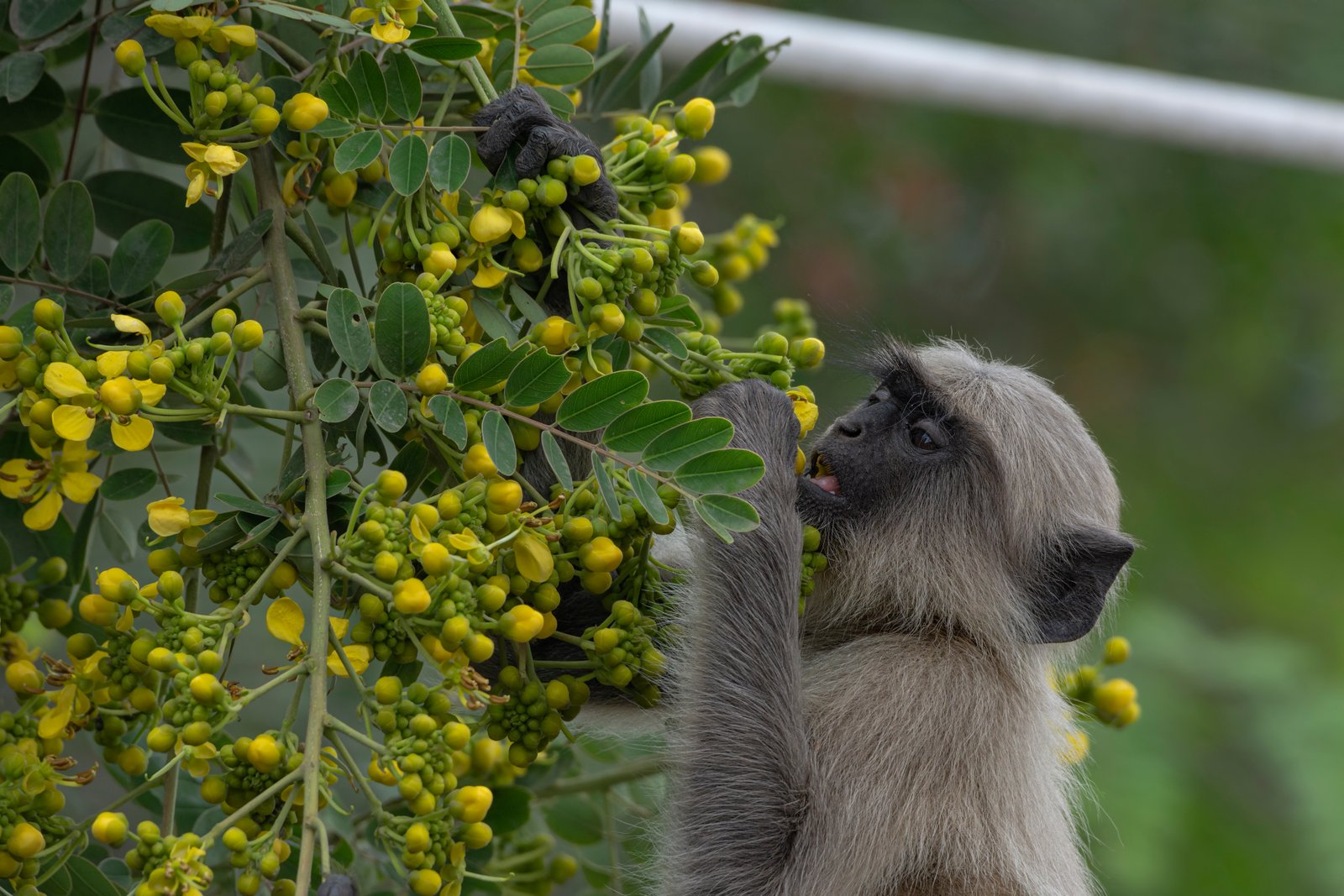
This original wildlife photograph captures a Gray Langur in Gujarat, India, documenting the natural appearance and distinctive features of this adaptable Indian primate.
The photograph was captured by wildlife photographer Amarjeetsinh Jhala and forms part of the Focused Nature By AJ collection of original wildlife, nature and animal photography.
About the Gray Langur
The Gray Langur is scientifically known as Semnopithecus entellus and belongs to the family Cercopithecidae, subfamily Colobinae, and order Primates.
The species is also known by several common names, including:
- Gray Langur
- Grey Langur
- Hanuman Langur
- Northern Plains Gray Langur
- Bengal Sacred Langur
ITIS recognizes Semnopithecus entellus as a valid species and lists Hanuman Langur and Northern Plains Gray Langur among its English common names.
Gray langurs are among the most widespread and familiar primates of the Indian subcontinent and are well adapted to a wide variety of habitats.
Gray Langur Identification
The Gray Langur has several distinctive characteristics that make it relatively easy to recognize in the field.
Important identification features include:
- Grey or greyish-brown body
- Black face
- Black ears
- Long limbs
- Long tail
- Slender body
- Relatively long hands and feet
- Pale or greyish body fur
- Distinctive primate facial structure
Gray langurs generally have a grey body contrasting with their dark face and ears. Their exceptionally long tail is another characteristic feature.
Hanuman Langur
The name Hanuman Langur is widely used for Semnopithecus entellus in India.
The name reflects the cultural significance of langurs in the Indian subcontinent. Hanuman langurs are familiar animals in many Indian landscapes and can be seen in forests, agricultural areas, villages, towns and around human settlements.
Their ability to live in both natural and human-modified environments has contributed to their widespread presence across India.
Gray Langur in Gujarat
This photograph was captured in Gujarat, India.
Gujarat provides a variety of habitats suitable for gray langurs, including dry deciduous forests, scrublands, rocky landscapes, agricultural areas and human-dominated environments.
Research from Gujarat has documented Hanuman Langurs (Semnopithecus entellus) in the Girnar forest region near Junagadh, including observations of their feeding behaviour and plant-based diet.
Gray langurs are therefore an important part of Gujarat’s terrestrial wildlife.
Habitat
Gray langurs are highly adaptable primates and can occupy a wide variety of habitats.
They may be found in:
- Dry deciduous forests
- Open forests
- Scrublands
- Grasslands
- Rocky landscapes
- Agricultural areas
- Gardens
- Villages
- Towns
- Urban environments
Gray langurs are known for their ability to survive in both natural habitats and landscapes modified by people.
Their broad habitat tolerance is one reason they can be encountered in many different parts of India.
Diet
The Gray Langur is primarily herbivorous.
Its diet can include:
- Leaves
- Young shoots
- Flowers
- Fruits
- Seeds
- Buds
- Grass
- Roots
- Other plant material
Studies of Hanuman Langurs in Gujarat have documented the consumption of leaves, flowers and fruits from several plant species.
Although primarily plant-eating, gray langurs can also consume some non-plant food items opportunistically.
Feeding Behaviour
Gray langurs spend considerable time searching for and consuming plant material.
They may feed in trees, shrubs and on the ground depending on the availability of food.
Their flexible feeding behaviour helps them survive in habitats ranging from dry forests to agricultural landscapes and urban environments.
In Gujarat’s Girnar forest, research has documented gray langurs feeding on leaves, flowers and fruits from numerous plant species.
Behaviour
Gray langurs are generally diurnal, meaning they are active during daylight hours.
They may spend time:
- Feeding
- Resting
- Grooming
- Travelling
- Climbing
- Moving between trees
- Foraging on the ground
- Socializing with other members of their group
Groups can contain multiple individuals, including adult males, females and young animals. Group structure can vary between populations.
Grooming is an important social behaviour among langurs and helps reinforce relationships within groups.
Gray Langur Social Behaviour
Gray langurs are social primates and can form groups of varying composition.
Depending on the population and ecological conditions, groups can include several adult females, young animals and one or more males. All-male groups and solitary males may also occur.
Social interactions can include grooming, playing, feeding together and coordinated movement.
Gray Langur and Indian Wildlife
The Gray Langur is an important component of India’s wildlife.
Because the species can survive across forests, scrublands, agricultural landscapes and urban environments, it is frequently encountered by people as well as wildlife enthusiasts and photographers.
Its adaptability also makes it an interesting species for studying the relationship between wildlife and human-modified environments.
Gray Langur Photography
The Gray Langur is an excellent subject for Indian wildlife photography and primate photography.
Its expressive face, contrasting black facial features, grey fur and long tail provide photographers with a variety of opportunities.
Wildlife photographers may capture Gray Langurs:
- Sitting in trees
- Feeding
- Grooming
- Walking on the ground
- Jumping between branches
- Resting
- Interacting with other langurs
- Moving through forests
- Observing their surroundings
This photograph forms part of the Focused Nature By AJ wildlife photography collection, documenting India’s birds, mammals, reptiles and natural environments.
Gray Langur in Indian Culture
The Hanuman Langur has a strong cultural association with India.
The common name Hanuman Langur reflects the connection between these primates and the Hindu deity Hanuman.
Because of this cultural association, langurs are familiar animals in many Indian communities and religious locations.
Conservation and Protection
The conservation situation of gray langurs varies between species and populations because the genus Semnopithecus contains several recognized species and their taxonomy has undergone considerable revision.
For Semnopithecus entellus, the Indian National Red List assessment currently available through the National Red List Database assesses the species as Near Threatened within India.
Potential threats to gray langurs and their habitats include:
- Habitat loss
- Habitat fragmentation
- Deforestation
- Mining
- Forest fires
- Road mortality
- Human-wildlife conflict
- Changes in natural food availability
Protecting forests, scrublands and wildlife corridors remains important for maintaining healthy langur populations.
Photography Details
Common Name: Gray Langur / Grey Langur
Alternative Common Name: Hanuman Langur
Other Common Name: Northern Plains Gray Langur
Scientific Name: Semnopithecus entellus
Family: Cercopithecidae
Subfamily: Colobinae
Order: Primates
Animal Type: Primate / Mammal
Location: Gujarat, India
Habitat: Dry Forests, Scrublands, Open Landscapes and Human-Dominated Areas
Diet: Primarily Herbivorous
Activity: Diurnal
Conservation Status in India: Near Threatened
Photograph Type: Wildlife / Mammal Photograph
Photographer: Amarjeetsinh Jhala
About This Photograph
This is an original Gray Langur wildlife photograph captured in Gujarat, India by wildlife photographer Amarjeetsinh Jhala.
The photograph forms part of the Focused Nature By AJ collection of original Indian wildlife and nature photography.
The image documents the natural appearance and behaviour of one of India’s familiar primates and is part of a growing collection featuring birds, mammals, reptiles and other wildlife.
The image can be licensed for approved personal, commercial, educational, editorial and printing applications according to the selected license.
Image Licensing
Personal Use
Suitable for personal collections, wallpapers and other approved non-commercial applications.
Commercial Use
Suitable for websites, digital marketing, advertising, social media, business presentations and other approved commercial applications.
Printing & Publication
Suitable for magazines, books, newspapers, calendars, educational publications, exhibitions and other approved editorial and printing uses.
Explore More Indian Mammal Photography
Explore more original Gray Langur photographs, Hanuman Langur photography, Semnopithecus entellus photographs, Indian primate photography, Gujarat wildlife photography, Indian mammal photography, Gujarat wildlife, Indian wildlife photography and nature photographs captured by Amarjeetsinh Jhala.
Focused Nature By AJ documents birds, mammals, reptiles and nature through original wildlife photography, with selected photographs available for personal, commercial and printing & publication licensing.
Reviews
There are no reviews yet.