Description
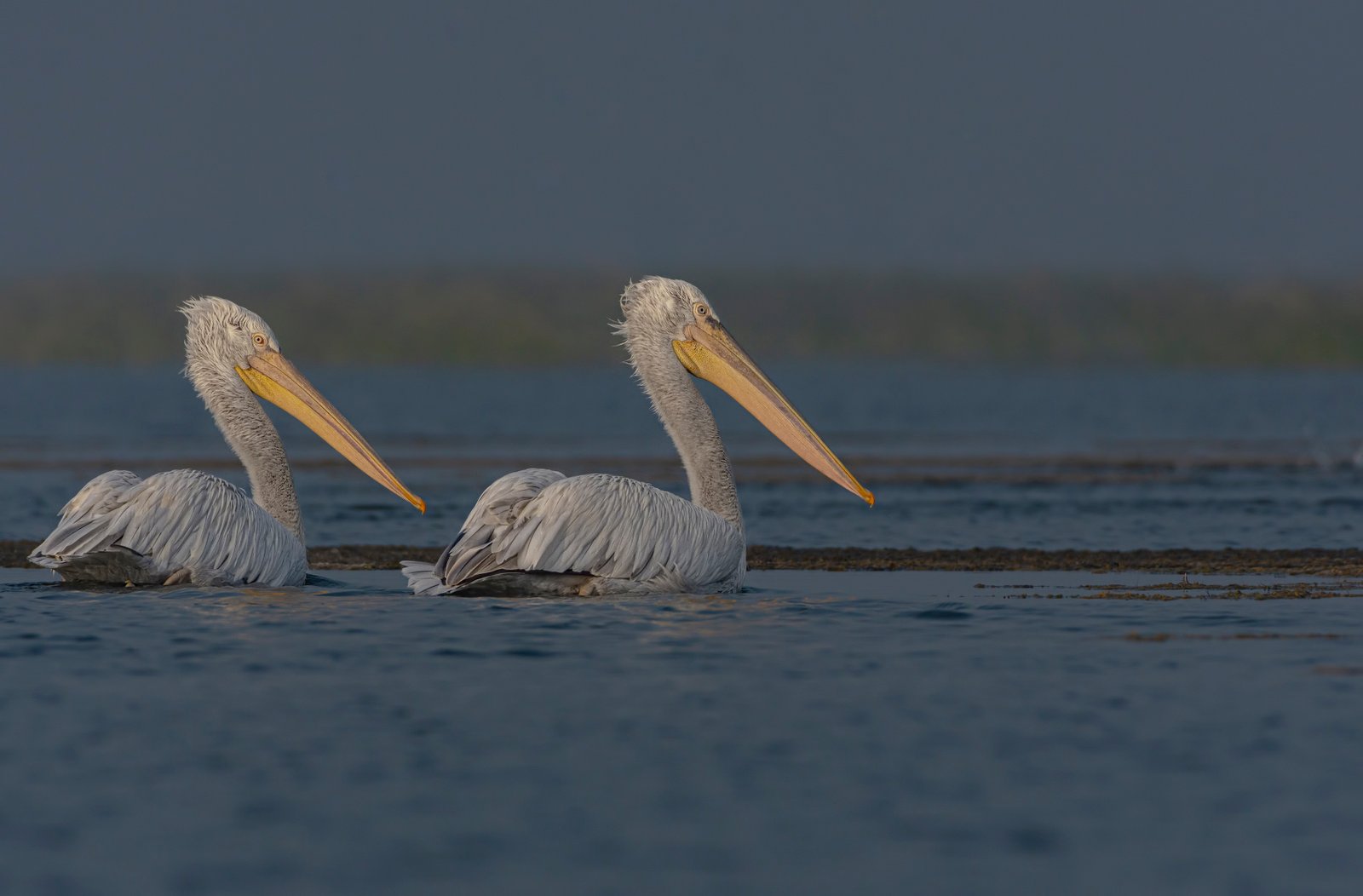
This original wildlife photograph captures a pair of Dalmatian Pelicans (Pelecanus crispus) at Nal Sarovar, Gujarat, India. The photograph showcases these impressive wetland birds in their natural environment and highlights the distinctive size, form and character of one of the world’s largest pelican species.
About the Dalmatian Pelican
The Dalmatian Pelican (Pelecanus crispus) is a large waterbird belonging to the pelican family, Pelecanidae. It is known for its enormous bill, large wings, long neck and predominantly pale plumage.
Dalmatian Pelicans are closely associated with freshwater and wetland ecosystems. Their large size and distinctive appearance make them an important and highly sought-after subject for birdwatchers and wildlife photographers.
Dalmatian Pelican at Nal Sarovar
Nal Sarovar is one of Gujarat’s important wetland landscapes and provides habitat for a wide variety of waterbirds.
Dalmatian Pelicans occur in India primarily as winter migrants, and Gujarat’s wetlands can provide important seasonal habitat for these large migratory waterbirds.
This photograph specifically documents a pair of Dalmatian Pelicans at Nal Sarovar, making it particularly relevant to collections focused on Gujarat’s wetland birds, Indian bird photography and migratory waterbirds.
Dalmatian Pelican Behaviour and Feeding
Dalmatian Pelicans spend much of their time around water and are adapted to catching aquatic prey. Their large bill and expandable throat pouch are characteristic adaptations for feeding.
Fish form an important part of their diet, while wetland habitats provide the aquatic environment they depend upon.
Habitat
Dalmatian Pelicans are associated with wetland habitats such as:
- Freshwater lakes
- Large wetlands
- Marshes
- Shallow water
- Rivers and associated wetlands
- Open water habitats
Healthy wetlands are particularly important for migratory waterbirds because they provide feeding, resting and seasonal refuge.
Conservation Status
According to the State of India’s Birds 2025 assessment, the Dalmatian Pelican (Pelecanus crispus) has a Near Threatened global Red List status and is protected under Schedule II of India’s Wildlife Protection Act.
The assessment identifies it as a winter migrant with wetland habitat specialization. It also reports a rapid current annual decline in India, highlighting the importance of conserving suitable wetland habitats for this species.
About This Photograph
This original wildlife photograph features a pair of Dalmatian Pelicans at Nal Sarovar, Gujarat.
The photograph is suitable for:
- Wildlife photography collections
- Bird photography collections
- Wetland and nature projects
- Bird identification and educational material
- Conservation projects
- Nature magazines
- Books and field guides
- Calendars
- Websites and digital publications
- Editorial projects
- Exhibitions
- Commercial applications
Product Details
Common Name: Dalmatian Pelican
Scientific Name: Pelecanus crispus
Bird Group: Pelican / Waterbird
Family: Pelecanidae
Subject: Pair of Dalmatian Pelicans
Behaviour: Natural Behaviour
Location: Nal Sarovar, Gujarat, India
Status in Gujarat: Winter Migrant
Habitat: Wetlands, lakes, shallow water, marshes and open water
Diet: Mainly fish and other aquatic prey
Global Conservation Status: Near Threatened (NT)
Indian Protection: Schedule II
Photographer: Amarjeetsinh Jhala
Photography Type: Bird & Wildlife Photography
Original Wildlife Photography by Amarjeetsinh Jhala
This is an original wildlife photograph captured by Indian wildlife and bird photographer Amarjeetsinh Jhala at Nal Sarovar, Gujarat.
The photograph captures an authentic moment from Gujarat’s diverse wetland birdlife and is intended for wildlife enthusiasts, bird photographers, educators, publishers, conservation organizations and commercial users.
Licensing Options
Personal Use
Suitable for personal collections, wallpapers, home décor and other non-commercial applications.
Commercial Use
Suitable for websites, digital marketing, advertising, promotional material and other commercial projects.
Printing & Publication
Suitable for magazines, books, calendars, brochures, exhibitions, editorial projects and high-quality printed publications.
Reviews
There are no reviews yet.